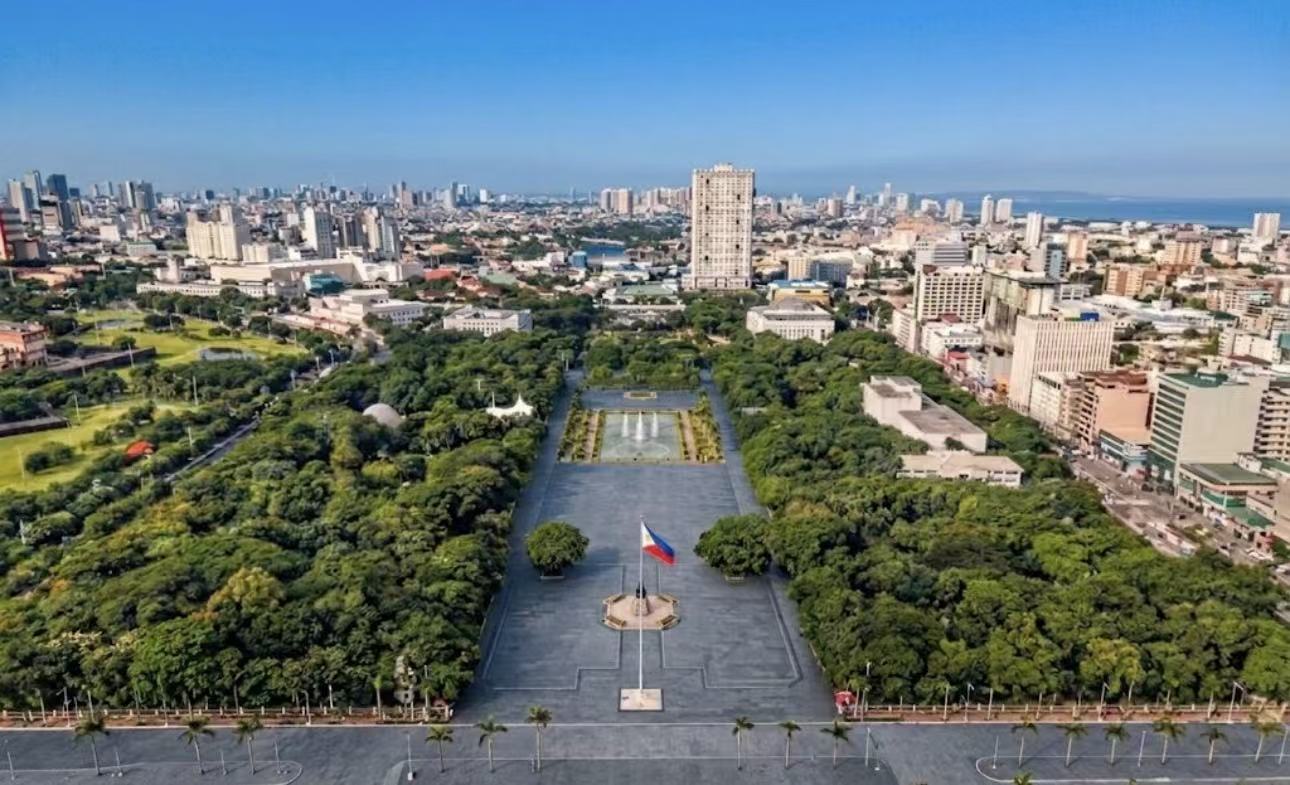
Rizal Park’s legacy is that of a sacred civic space where martyrdom, nationhood, and everyday life meet: the field where José Rizal was executed became the symbolic heart of the Philippine struggle for freedom and the stage for the country’s most important political and cultural moments.
Table of Contents
From execution ground to national shrine
Rizal Park, historically called Luneta (from the Spanish “luneta,” meaning “little moon” or “crescent”), began as an open field known as Bagumbayan on the edge of Intramuros, the Spanish walled city. Under Spanish rule it served as a promenade but also as an execution ground for those who challenged colonial authority. Its defining moment came on December 30, 1896, when Dr. José Rizal—physician, novelist, and reformist—was shot by firing squad on this site. His death did not silence the movement he inspired; instead, it galvanized outrage and accelerated the Philippine Revolution against Spain, turning Rizal into a martyr and the park into a place of memory.
After independence, the area was formally renamed Rizal Park in his honor, and the Rizal Monument—completed in 1913—was erected as its focal point. The monument marks the approximate spot of his execution and houses his remains, guarded 24/7 by Philippine Marine sentinels, making it both a tomb and a living symbol of nationhood. In 1955, the park was designated a national park to protect its historical and cultural importance, cementing its status as a protected landscape of memory.
A stage for independence and people power
Rizal Park’s legacy is not only about 1896; it is also about the moments when the Filipino people gathered to claim their future. On July 4, 1946, the park witnessed the inauguration of the Third Philippine Republic and the formal recognition of Philippine independence by the United States, transforming the site of colonial execution into the stage for sovereign statehood. Over the decades, it became a natural gathering point for mass political events, from rallies under Ferdinand Marcos to the crowds that helped usher in democracy during the People Power Revolution of 1986.
The Quirino Grandstand, facing the park, has hosted presidential inaugurations, state ceremonies, and national celebrations, reinforcing Rizal Park’s role as the country’s civic mall. Even when major events like the June 12 Independence Day proclamation were held elsewhere, the park became a central space for Filipinos to celebrate and remember those milestones. In this sense, the park’s legacy is layered: it holds the grief of martyrdom and the joy of self-rule in the same open lawns.
Monuments, gardens, and the geography of memory
Walking through Rizal Park feels like moving through a curated map of Philippine heroism. The Central Lagoon is lined with busts of Filipino heroes and martyrs, while other areas feature monuments to figures like Lapu-Lapu, whose statue stands near the National Museum complex at the park’s east end. The Site of Rizal’s Execution is marked by a black granite wall inscribed with his final poem, “Mi Último Adiós” (“My Last Farewell”), inviting visitors to stand where history turned. Nearby, the Gomburza monument commemorates the three priests (Gomez, Burgos, Zamora) executed in 1872, another key moment in the awakening of nationalist sentiment.
The park also embraces regional ties and everyday beauty through its Japanese and Chinese Gardens, the Manila Orchidarium, and the large three-dimensional relief map of the Philippines that lets visitors “see” the archipelago from above. At night, the musical dancing fountain adds a contemporary layer of leisure and spectacle, showing how the park balances solemn memory with public enjoyment. Together, these features make Rizal Park not just a shrine but a cultural hub where museums, libraries, and specialized gardens attract researchers, students, and families.
War, reconstruction, and resilience
Rizal Park’s physical landscape also bears the marks of 20th‑century conflict. During the Battle of Manila in 1945, the park became a major battlefield between Japanese and American forces, suffering severe damage as the city was liberated. Postwar reconstruction restored its lawns, monuments, and walkways, but the memory of that destruction adds another layer to its identity: a green space that has been broken and rebuilt, much like the nation itself. This resilience is part of its legacy—the park endures as a place where Filipinos return after crisis to mourn, protest, celebrate, and simply breathe.
Everyday life in a historic park
For many Manileños, Rizal Park is more than a textbook site; it is part of daily life. On weekends and holidays, families picnic on the lawns, joggers circle the paths, and children play near the fountains and relief map. Fitness groups hold sessions in the early morning; couples stroll along the bay-facing promenades; and tourists pause for photos at the Kilometer Zero marker, the point from which distances across the Philippines are measured. This ordinary use is itself part of the park’s legacy: a historic ground that remains alive, not frozen in time, but woven into the routines of a modern city.
Adjacent institutions deepen this role. The National Museum Complex—comprising the National Museum of Fine Arts, the National Museum of Anthropology, and the National Museum of Natural History—sits alongside the park, turning the whole area into an open-air classroom on Philippine art, culture, and natural heritage. The National Planetarium and other educational sites further extend the park’s function as a place of learning.