
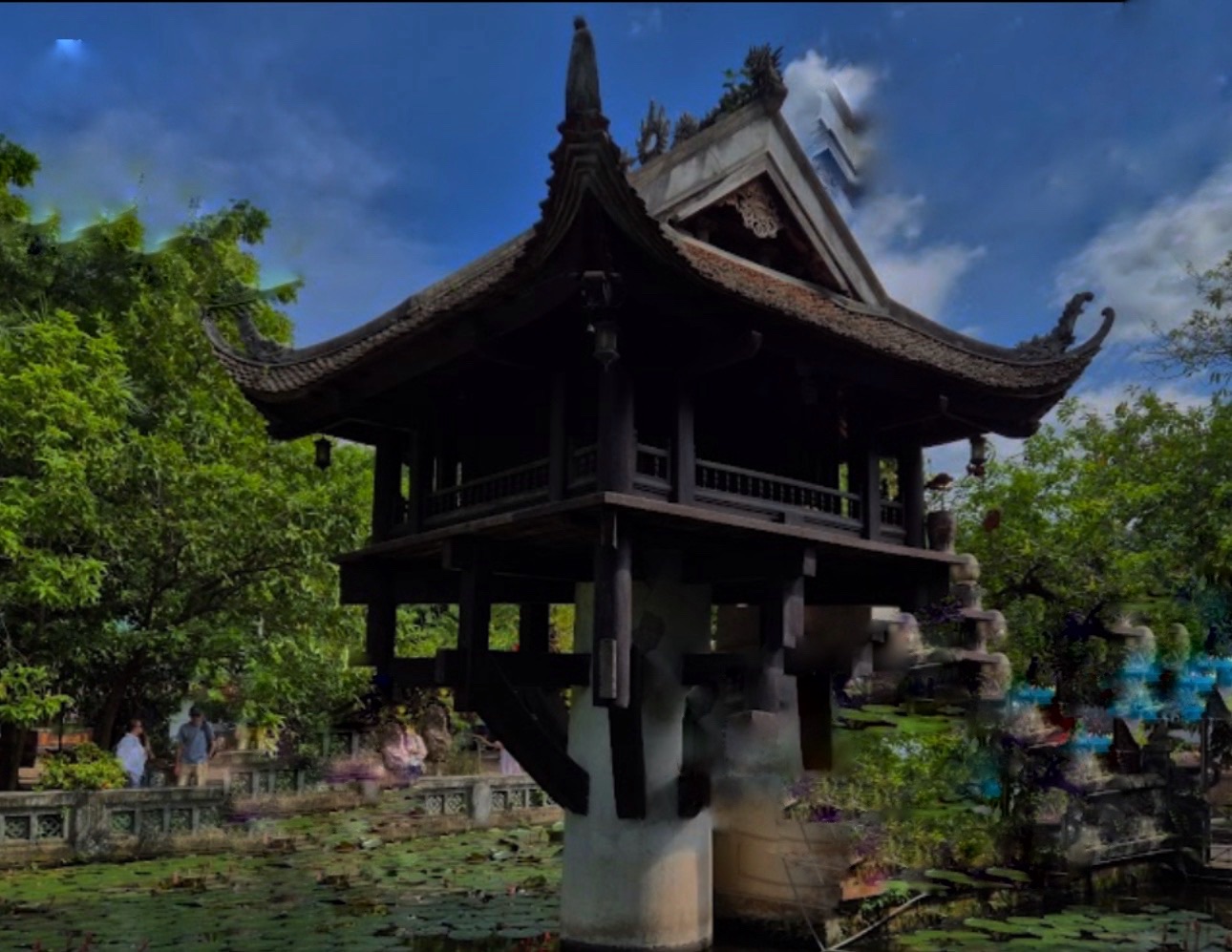
Hanoi, Vietnam’s ancient capital with over a millennium of history, is a city of contrasts—where frenetic energy meets profound serenity, and the past seamlessly blends with the present. At its heart stands one of the most iconic symbols of this enduring spirit: the One Pillar Pagoda (Chùa Một Cột). This delicate structure, rising like a lotus flower from a single stone pillar in a tranquil pond, encapsulates Buddhist ideals of purity and enlightenment while serving as a poignant reminder of Hanoi’s resilience through centuries of change.
The Legend Behind the Icon
The story of the One Pillar Pagoda dates back to 1049, during the reign of Emperor Lý Thái Tông of the Lý Dynasty. The emperor, advanced in age and without an heir, dreamed of the bodhisattva Avalokitesvara (known as Quan Âm in Vietnam) seated on a lotus throne, presenting him with a son. Shortly after, he married a young villager who gave birth to a prince, fulfilling the vision. In gratitude, Lý Thái Tông commissioned the pagoda to mirror the lotus from his dream—a square wooden temple elevated on one pillar amidst water, symbolizing emergence from suffering toward spiritual awakening.
Refined in 1105, the original pagoda stood for centuries until its destruction by retreating French forces in 1954. Rebuilt in 1955, the current version—though slightly smaller—preserves the ethereal design, with a concrete pillar supporting a shrine to Quan Âm.
Architectural Marvel and Spiritual Symbolism
What makes the One Pillar Pagoda truly unique is its architecture. The single pillar represents the stem of a lotus, while the temple above blooms like the flower itself—a profound Buddhist metaphor for rising above the muddy waters of worldly desires. Visitors climb a narrow spiral staircase to the intimate interior, filled with incense, golden statues, and offerings. The surrounding lotus pond, especially vibrant in bloom during summer, enhances the sense of peace amid Hanoi’s bustle.
Located in the Ba Đình District near the Ho Chi Minh Mausoleum, it’s a place where history and faith intersect, drawing pilgrims and tourists alike.
Chaos and Charm in the Old Quarter
To understand Hanoi, venture into the Old Quarter, a maze of 36 streets originating in the 13th century, each once dedicated to a specific guild craft—like silk, silver, or herbs. Today, it’s a sensory overload: motorbikes honking through narrow alleys, vendors hawking fresh fruits from shoulder poles, and shops spilling over with handicrafts and streetwear.
By evening, the area ignites with food stalls offering classics like bun cha (grilled pork with vermicelli) and pho. It’s the pulsating heart of Hanoi, where tradition thrives amid modernity.
Serenity at Hoan Kiem Lake
In contrast to the Old Quarter’s frenzy lies Hoan Kiem Lake, the “Lake of the Returned Sword.” Legend tells of 15th-century Emperor Lê Lợi, who used a divine sword from a golden turtle to repel Chinese invaders, later returning it to the turtle—hence the name.
The red Húc Bridge leads to Ngoc Son Temple, while the mid-lake Turtle Tower stands as a scenic landmark. Dawn brings locals practicing tai chi along the shores, making it a perfect spot for reflection.
Vietnam’s Cradle of Learning: Temple of Literature
Founded in 1070, the Temple of Literature (Văn Miếu) is Vietnam’s oldest university, dedicated to Confucius and educating the elite. Its five courtyards feature serene gardens, pavilions, and stone stelae atop turtles—symbols of longevity—listing doctoral laureates.
Modern students visit to pray for exam success, often touching the turtle heads for luck. It’s a haven of scholarly tranquility in the city center.
Savoring Hanoi’s Culinary Soul
Hanoi’s food scene is legendary, blending fresh ingredients with French colonial influences. Start mornings with pho, a fragrant beef noodle soup. But the true delight is cà phê trứng (egg coffee), born in the 1940s from milk shortages: strong Vietnamese coffee topped with a whipped egg yolk custard, sweet and creamy.
Seek it at historic spots like Café Giang in the Old Quarter for an unforgettable treat.
A Timeless Symbol of Resilience
In a city that has endured invasions, wars, and rapid development, the One Pillar Pagoda endures as a beacon of balance and renewal. Like the lotus it emulates, Hanoi rises gracefully from its historical depths—vibrant, unyielding, and deeply captivating.
Plan your visit early to the pagoda for fewer crowds, dress respectfully, and pause by the pond to absorb its quiet wisdom. In doing so, you’ll connect with the profound soul of this extraordinary city.