Just a few kilometers from the roaring motorbikes and gleaming skyscrapers of central Hanoi, the air undergoes a profound transformation. The scent of exhaust and urban life gently fades, replaced by an olfactory tapestry so rich and complex it feels almost visible. It’s a warm, woody, slightly sweet aroma that seems to weave through the sunlight—a blend of sandalwood, cinnamon, star anise, and something ancient and reverent. This is your welcome to Insense Village, or more accurately, the ancient craft village of Quang Phu Cau. Here, in a vibrant explosion of color and tradition, the sacred art of incense-making breathes the soul of Vietnam into the air.
A Palette of Prayer: The Colorful Heartbeat of the Village
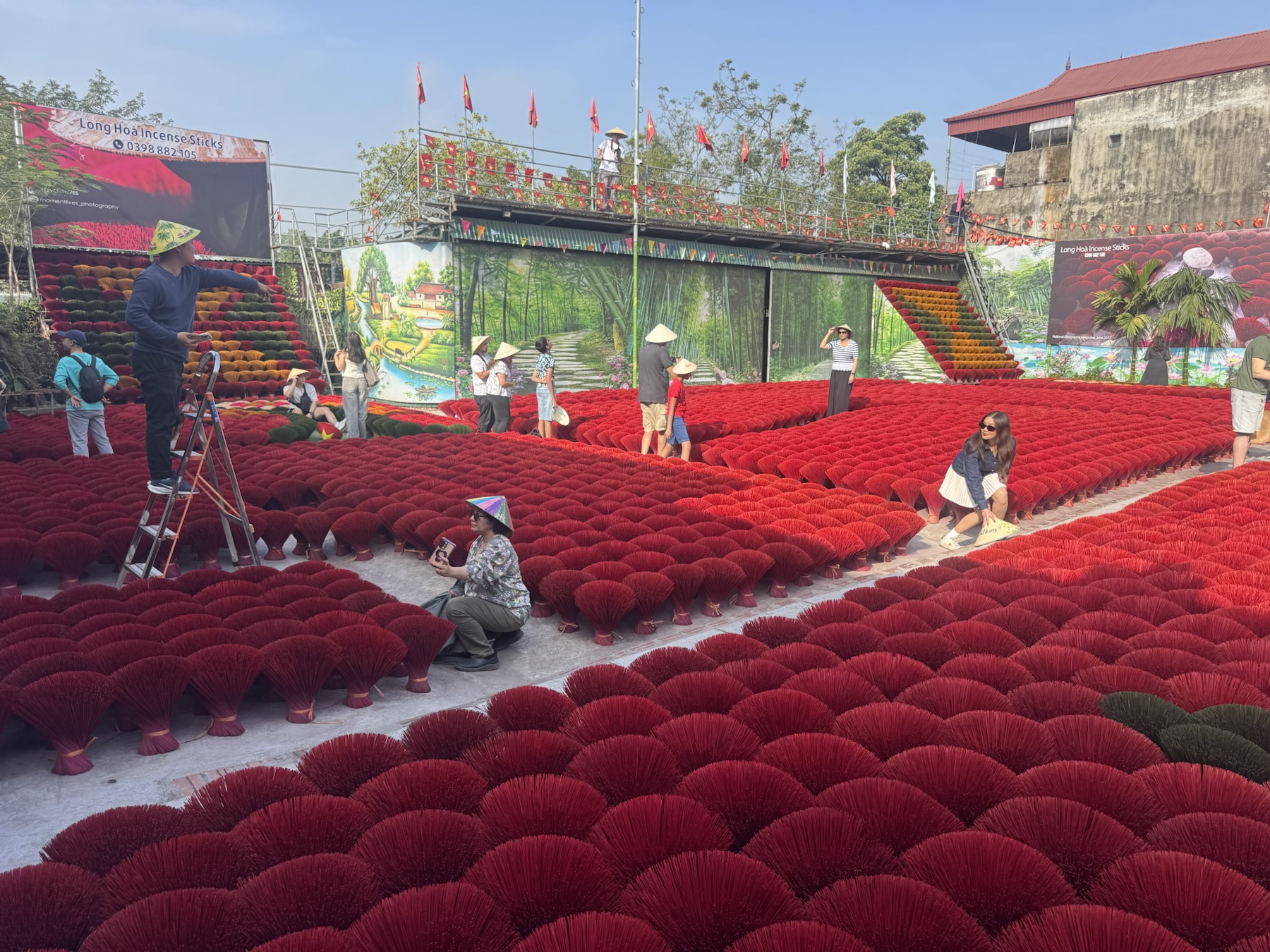
To call Quang Phu Cau colorful is a breathtaking understatement. The village is a living impressionist painting. As you step into its narrow lanes, you’re greeted by rivers of vermilion, saffron, magenta, and sunshine yellow. Entire courtyards, front yards, and even the pavement itself become canvases for drying incense sticks. They are laid out in vast, concentric sunbursts, stacked in towering bundles like golden haystacks, or hung in cascading curtains that flutter gently in the breeze, filtering the sunlight into a stained-glass glow.
This visual spectacle is not merely for tourists; it is the very industry’s lifecycle made visible. The vibrant pinks and reds, derived from natural dyes, speak to different traditions and purposes—red for luck and celebration, yellow for gratitude and peace, and deep browns for ancestral veneration. Walking these lanes is a sensory immersion, where the eyes feast on rainbows and the lungs fill with the perfume of devotion. It’s a powerful reminder that this craft engages the whole being, a philosophy made manifest in its dazzling, open-air workshops.
From Royal Ritual to Household Heritage: An Industry History
The history of incense-making in Quang Phu Cau stretches back over a century, with some accounts tracing its roots to the late 19th century. Unlike many crafts born from agrarian life, this village’s industry was built on spirituality and commerce. Located strategically near the Red River and old trade routes, the village began supplying incense to the thousands of pagodas, temples, and family altars across the capital and beyond.
Initially, it was a seasonal craft, complementing the rhythms of rice farming. But as Hanoi grew, so did the demand for this essential element of Vietnamese spiritual life. Incense is the bridge between the earthly and the divine, its smoke carrying prayers and offerings to ancestors and buddhas. Quang Phu Cau’s industry evolved to meet this profound need, transforming from a supplementary household activity into the village’s defining identity. Through wars, economic shifts, and modernization, the villagers kept the fires of this tradition burning. It’s a history not of kings and conquests, but of persistent craftsmanship, a quiet, fragrant thread woven through the tumultuous tapestry of Vietnam’s past.
The Alchemy of Scent: The Traditional Way of Making
Behind the breathtaking colors lies a painstaking, deeply skilled traditional way of making that has changed little in generations. This is not mass production; it’s an alchemy of patience and knowledge, often conducted as a family symphony where each member has a part.
The process begins with the core: thin bamboo sticks, gathered and cut to precise lengths. These are smoothed and prepared before their fragrant baptism. The heart of the incense is the hương liệu—the scent blend. This is where the magic resides. Artisans use recipes passed down through families, grinding precious woods like sandalwood (đàn hương) and agarwood (trầm hương) with a symphony of spices: cinnamon bark, star anise, cloves, and sometimes dried herbs. Each family’s blend is a guarded secret, their unique signature in scent.
The most iconic step, and the source of the village’s colorful fame, is the coating process. The bare bamboo sticks are dipped into a thick, glue-like paste made from the boi loi tree, then repeatedly rolled in the fragrant sawdust mixture. This is often done by hand, with a rhythmic, dancing motion that coats the sticks evenly. The final dip is into the natural dye, granting them their brilliant hues. Then, they are laid out to dry—a process that can take days under the perfect sun, turning the village into a mosaic of fragrance.
Watching an elderly artisan, her hands stained with decades of vermilion and spice, roll sticks with hypnotic grace is to witness living heritage. It’s a traditional way of making that values the human touch, where the quality is judged by the evenness of the coat, the density of the scent, and the slow, clean burn.
More Than Product: The Cultural Resonance
In Quang Phu Cau, incense is never just a commodity. Every stick carries a cultural weight. In Vietnamese belief, the smoke of incense (nhang khói) symbolizes the connection between heaven and earth, the visible and invisible. It purifies space, carries prayers upwards, and welcomes ancestral spirits back to the altar during important days like Tết (Lunar New Year).
When you buy a bundle from a village workshop, you’re not just purchasing a scented stick; you’re holding a conduit for gratitude, remembrance, and hope. The villagers understand this deeply. Their work is infused with a sense of purpose that transcends industry. They are the keepers of a ritual, the providers of a spiritual tool essential to the daily and festive life of their nation.
The Future of the Fragrant Village
Today, Quang Phu Cau stands at a crossroads familiar to many traditional crafts. While the traditional way of making is still revered, there are pressures. Cheaper, mass-produced chemical incense threatens the market. Some younger generations seek less labor-intensive work in the city. Yet, the village is adapting. The stunning visual appeal has turned it into a responsible tourism destination, drawing photographers and cultural travelers who provide a new economic stream. This visibility helps validate the craft’s value.
Many families now produce artistic, colorful incense bundles for decoration alongside ritual sticks. The essence, however, remains. The village’s industry history is its anchor, and its commitment to natural materials and handcrafted quality is its compass.
A Visit to Remember
Visiting Insense Village is more than a photo opportunity. It’s a lesson in slowing down. Spend a morning getting lost in its rainbow alleyways. Pause and watch the artisans. Inhale the sacred air. You might be invited to try your hand at rolling a stick, only to appreciate the skill involved in achieving that perfect, even coat.
Buy a bundle from a family stall—the conical incense coils are particularly mesmerizing. As the fragrant smoke later spirals upward in your own home, it will carry with it not just your thoughts, but the memory of sunlight on saffron sticks, the smile of a craftsman, and the resilient, colorful heartbeat of a tradition that continues to breathe and burn, connecting past to present with every silent, scented thread.