To step into Hanoi’s Old Quarter is to be swallowed whole by a living, breathing organism. It is a place where time folds in on itself, where the scent of centuries-old incense mingles with the aroma of sizzling street food, and where the relentless hum of motorbikes forms the bassline to a symphony of clinking tea cups, haggling vendors, and echoing temple bells. This is not a district you simply visit; it is an experience you absorb through every sense, a thrilling, overwhelming, and utterly captivating immersion into the heart of Vietnam’s capital.
The Architectural Whisper: Tube Houses and Narrow Streets
The Old Quarter’s bones are its legendary narrow streets, each one historically dedicated to a specific guild or trade. Hang Bac (Silver Street), Hang Ma (Paper Offerings Street), and Hang Gai (Silk Street) still whisper of their origins, though their wares have modernized. The defining architectural feature here is the tube house. These impossibly slender, deep dwellings were born from a historical tax system based on street frontage. Peek through an open doorway, and you’ll see a world unfolding in a sliver of space: a shop at the front, a courtyard for light and air, living quarters above, and a kitchen at the rear, sometimes stretching back 60 meters or more. They are marvels of efficient, adaptive design, standing as silent testament to generations of Hanoian life and commerce, their weathered yellow facades painted with the patina of time and tropical humidity.
Navigating these streets is an adventure in itself. The fabled motorbike parking everywhere is not an exaggeration but a defining visual. Pavements transform into impromptu parking lots, a sea of handlebars and wheels that forces pedestrians into a delicate dance with the ceaseless flow of traffic. Crossing the street becomes an act of faith—a slow, steady pace, trusting the river of bikes to part around you. This organized chaos is the Quarter’s lifeblood, a pulsing, dynamic energy that is as exhausting as it is exhilarating.
A Feast for the Senses: Vibrant Markets and Authentic Food
The commerce that defined the Old Quarter’s streets now erupts in its vibrant markets. Dong Xuan Market, the colossal covered hall, is a universe of its own: stacks of spices forming vibrant mountains, bolts of colourful fabrics, household goods, and souvenirs. But for true local flavour, the smaller, wet markets tucked down alleyways are where authentic food culture thrives. Here, baskets overflow with verdant herbs, glistening seafood, and cuts of meat, all destined for the city’s famed kitchens.
And those kitchens are everywhere. The Old Quarter is Vietnam’s ultimate culinary playground. It’s where you squat on a tiny plastic stool at 7 AM for a bowl of pho bo (beef noodle soup), its aromatic broth simmered for hours. It’s where you follow the scent of charcoal to find bun cha (grilled pork with noodles) being cooked on the sidewalk. It’s biting into a crispy banh mi from a cart, its baguette a legacy of French influence, stuffed with pate, cilantro, and chili. Every corner offers a new taste: steaming banh cuon (rolled cakes), sweet che (dessert soup), or the iconic egg coffee—a rich, sweet concoction that tastes like liquid tiramisu. This is not dining; it’s gastronomic exploration where the best seats are often the least assuming.
The Social Heart: From Liquid Reflections to Liquid Courage
At the geographical and spiritual centre of the chaos lies the serene oasis of Hoan Kiem Lake. This emerald-green body of water, with the graceful Turtle Tower at its heart and the red Huc Bridge leading to the Ngoc Son Temple, is the city’s lung and soul. At dawn, it’s a ballet of tai chi practitioners moving in slow motion. By evening, it’s a promenade for families, couples, and friends, the chaos of the streets melting away into the gentle lapping of water. The lake acts as the Old Quarter’s tranquil counterpoint, a place for reflection literally and figuratively.
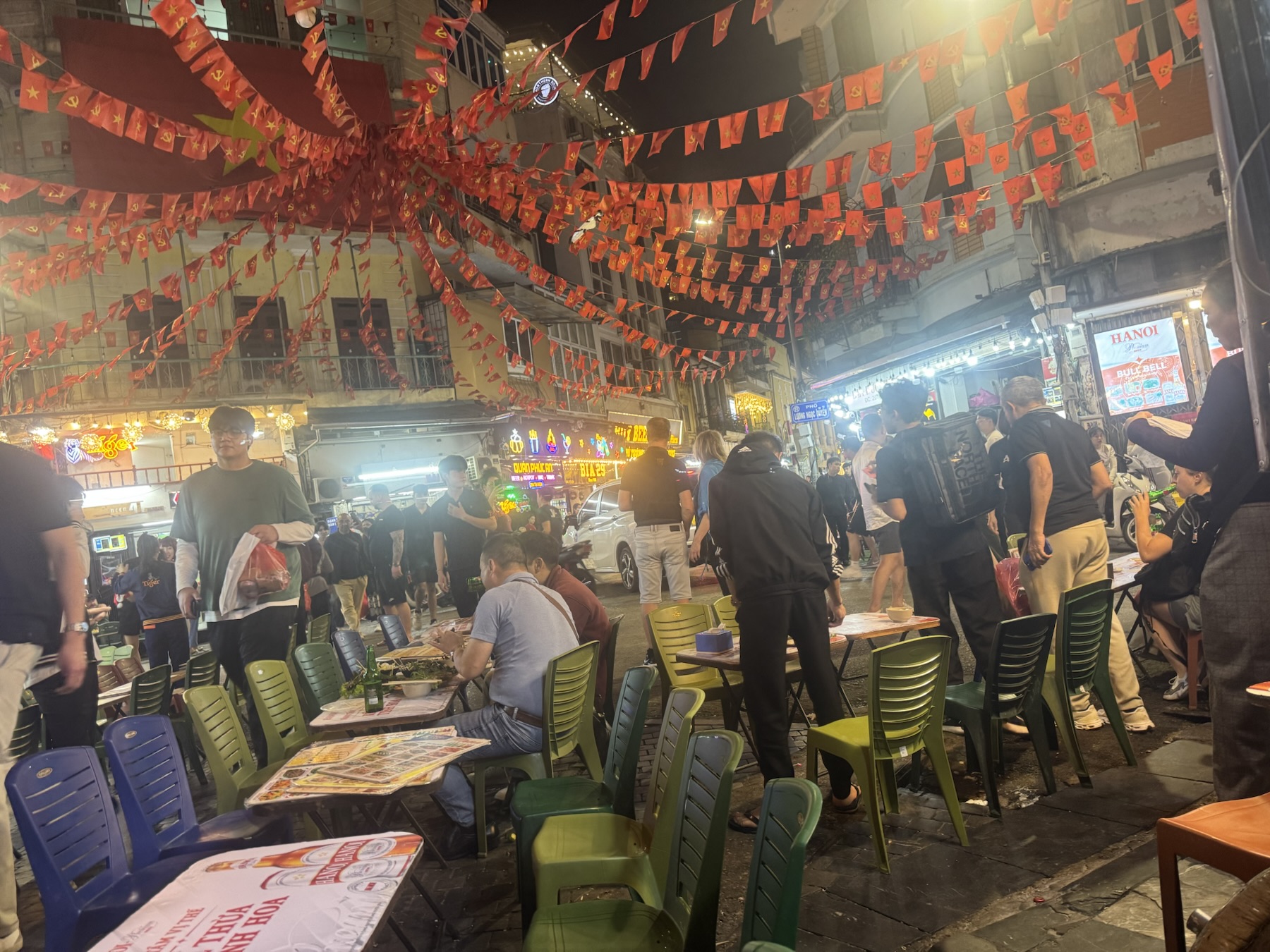
As dusk falls, one particular corner of the Quarter trades quiet reflection for unabashed revelry. Ta Hien Street, universally known as Beer Street, erupts into life. The narrow lane is jammed with more tiny plastic stools, this time packed with a mix of backpackers, expats, and locals. The air thickens with laughter, shouted conversations, and the clink of bia hoi glasses. Bia hoi is the world’s cheapest draft beer—a light, refreshing, daily-brewed lager served from giant kegs. It’s less about the drink and more about the democratic, convivial atmosphere. Sitting here, shoulder-to-shoulder with strangers, watching the motorbikes inch through the crowd, is to participate in a quintessential Hanoian ritual of community and release.
Echoes of Empire and Modernity
Flanking the Old Quarter are grand monuments that speak of a different era and a different pace. The magnificent Opera House, a stunning example of French Colonial architecture with its ivory facade and slate roof, stands as a beacon of high culture. Attending a performance here is a journey back to the Indochine era, a world away from the street food stalls just a few blocks over.
In a similar architectural vein but representing the new Vietnam is the Hanoi Stock Exchange. Housed in the beautifully restored former French Indochina Stock Exchange building, its neoclassical columns symbolize the country’s fierce economic ambitions. Its presence so close to the ancient merchant streets creates a fascinating dialogue between old commerce and new capitalism, between guilds and global markets.
Your Basecamp: Hotels and Restaurants
For the traveller, the Old Quarter is the undisputed place to stay. The range of hotels is vast, from charming family-run guesthouses hidden down alleys, where breakfast is served on a rooftop overlooking the tile roofs, to stylish boutique hotels nestled within restored tube houses, blending historic character with modern luxury. Staying here means you are never more than a few steps from the action, able to dive into the maelstrom at will and retreat to comfort when needed.
While street food is king, the Quarter’s restaurant scene is also richly layered. Elegant garden restaurants are concealed behind unassuming doors, serving refined interpretations of classic dishes. International cuisine sits alongside traditional com pho (rice and noodle) eateries. From a multi-course feast at a celebrated culinary institution to a simple, perfect bowl of noodles at a decades-old stall, every meal tells a story.
The Enduring Spell
Hanoi’s Old Quarter is a glorious paradox. It is hectic yet deeply peaceful in its hidden corners; ancient yet vibrantly alive; overwhelming yet intimately welcoming. It is a place where you will get lost, both in its labyrinthine streets and in its captivating spirit. You’ll leave with the scent of grilled meat and jasmine in your clothes, the sound of horns in your ears, and the taste of egg coffee on your lips. But more than that, you’ll carry with you the memory of a place that refuses to be a mere relic. It is a community, a marketplace, a kitchen, a home—a relentless, beautiful, humming testament to the resilient and joyous spirit of Hanoi. It doesn’t just capture your imagination; it stakes a permanent, chaotic, and utterly wonderful claim on a piece of your soul.