Halong Bay, a UNESCO World Heritage Site, Sung Sot Cave—known as Surprise Cave—stands out as one of the most spectacular natural wonders in Vietnam. Located on Bo Hon Island, this massive grotto lives up to its Vietnamese name “Sung Sot,” meaning “astonishment” or “surprise.” The modest entrance gives no hint of the vast, intricately decorated chambers that await inside. For travelers exploring Halong Bay, a visit to Sung Sot Cave is an unforgettable highlight, blending geological marvels, historical discovery, and cultural storytelling.
The Geological Origins of Halong Bay and Its Caves
Halong Bay’s iconic landscape began forming hundreds of millions of years ago. During the Carboniferous-Permian period, around 300–400 million years ago, the region lay beneath shallow tropical seas where thick layers of limestone accumulated. Tectonic movements later lifted these deposits above sea level, and cycles of rising and falling sea levels, combined with erosion, sculpted the bay’s towering karsts and hidden caves.
Sung Sot Cave itself formed through karst dissolution. Rainwater, naturally acidic from absorbing atmospheric carbon dioxide, seeped through cracks in the limestone, slowly dissolving calcium carbonate and creating vast underground voids. Over millennia, these spaces expanded into the enormous chambers visitors see today. As sea levels dropped, the caves became dry and accessible, while mineral-rich drips left behind stunning stalactites, stalagmites, and other speleothems. This patient natural artistry makes Sung Sot one of the finest examples of karst cave formation in the world.
Discovery and Historical Significance
French explorers officially documented Sung Sot Cave in 1901 during the colonial period when Vietnam was part of French Indochina. Awestruck by the contrast between the narrow entrance and the grandiose interior, they named it “Grotte des Surprises” (Cave of Surprises). The name stuck, eventually translating into the Vietnamese “Sung Sot.”
Despite its early discovery, the cave remained largely inaccessible to the public until the early 1990s. Infrastructure improvements on Bo Hon Island finally allowed organized tours to begin in 1993. This timing aligned perfectly with Halong Bay’s designation as a UNESCO World Natural Heritage Site in 1994, bringing global attention to its outstanding geological and aesthetic value. Today, Sung Sot is the most visited cave in the bay, featured on nearly every cruise itinerary.
Vietnamese Folklore and Mythical Connections
Beyond science and history, Sung Sot Cave is steeped in Vietnamese folklore. One popular legend ties the cave to Thanh Giong (Saint Giong), a mythical hero who defended the nation against northern invaders. According to the tale, the cave preserves remnants of his epic battle: stalactites resembling his iron horse and sword, small ponds interpreted as hoofprints, and scattered rocks seen as discarded weapons.
Local guides delight in pointing out imaginative shapes—elephants, dragons, turtles, blooming flowers, or even a general rallying troops. A prominent phallic stalagmite, illuminated in pink, is often linked to fertility symbols in Vietnamese culture. These stories blend mythology with the cave’s surreal formations, adding a rich cultural layer to the natural spectacle.
Approaching the Cave: The Journey to the Entrance
The adventure begins long before stepping inside. Most visitors arrive by cruise ship or day boat, docking at the floating pier on Bo Hon Island. From there, a steep but well-maintained stone pathway climbs about 100–200 steps through dense tropical foliage.
Sung Sot Cave
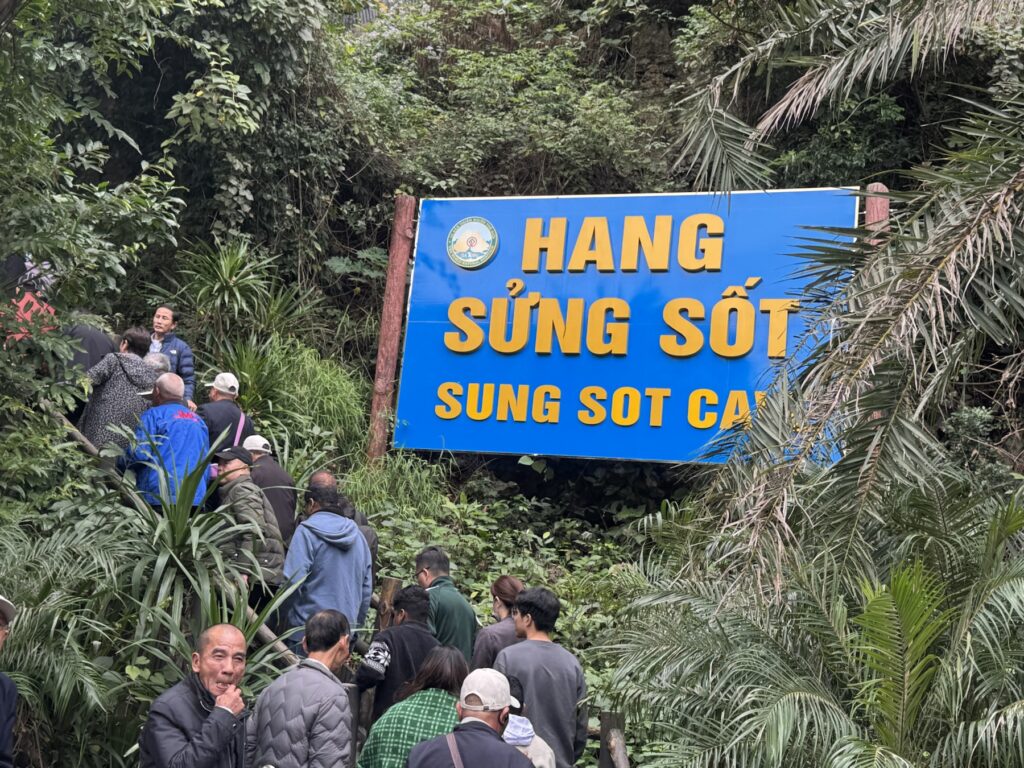
The ascent takes 10–15 minutes and offers rewarding glimpses of Halong Bay’s turquoise waters and jagged islands below. Monkeys sometimes scamper alongside the path, adding to the wild atmosphere. The entrance itself appears unassuming—a narrow opening framed by greenery—heightening the sense of anticipation for what lies beyond.
Inside the First Chamber: The Grand Welcome
Stepping through the entrance instantly reveals why the cave earned its name. The first chamber, often compared to a lavish opera house or waiting room, opens into a vast space with a soaring domed ceiling up to 30 meters high.
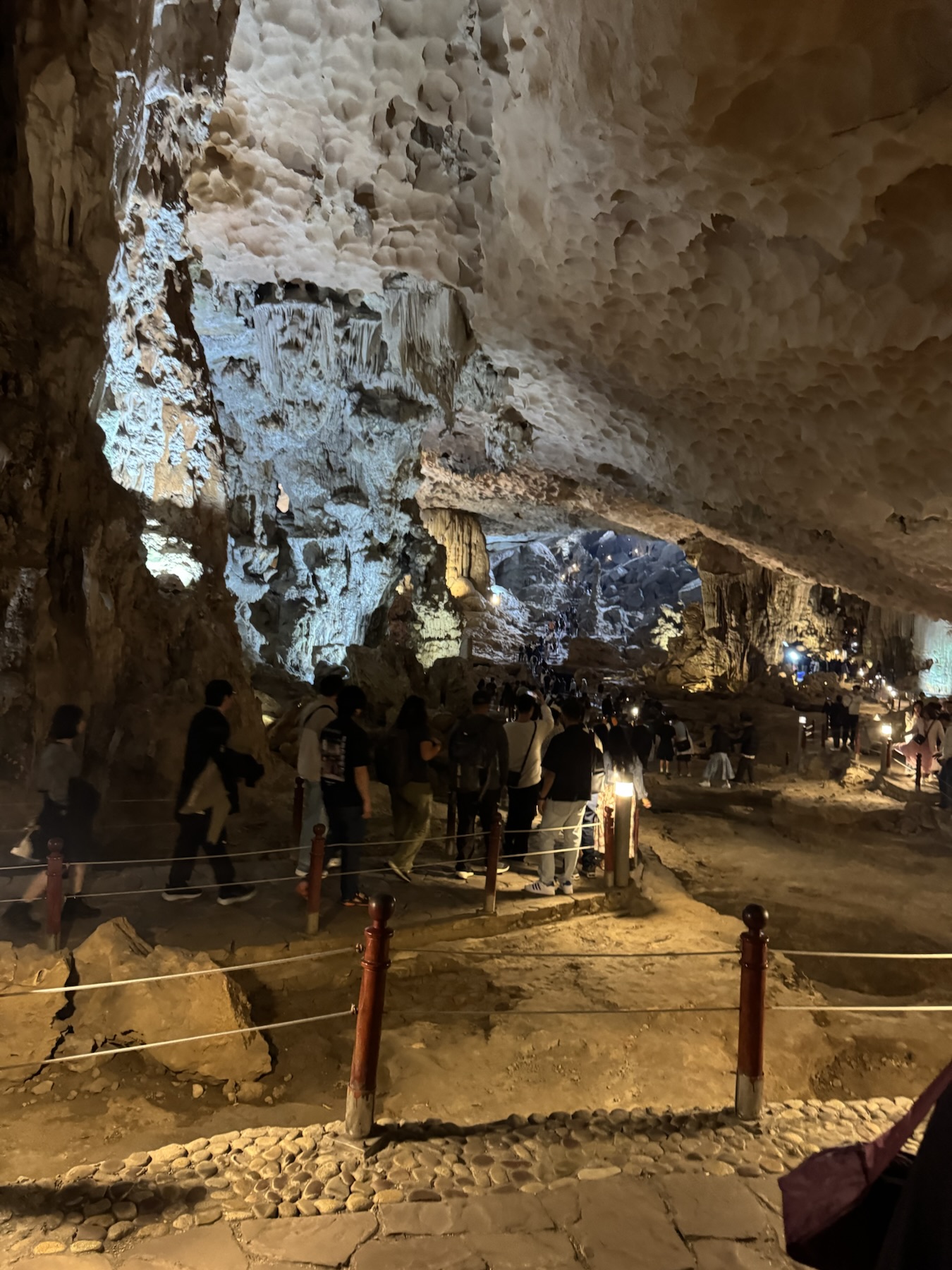
Multicolored LED lights dramatically illuminate countless stalactites dangling like chandeliers and stalagmites rising like ancient pillars. The smooth, rippling walls resemble frozen waterfalls or velvet curtains, shaped by ancient water flows. Formations here evoke familiar images: towering sentinels, blooming lotuses, or playful animals frozen in stone. The sheer scale and intricate detail leave most visitors speechless.
The Second Chamber: The Heart of Astonishment
A narrow passage leads into the second and largest chamber—the true centerpiece of Sung Sot Cave. This immense hall feels cathedral-like, easily accommodating thousands of people beneath its towering ceiling.
The lighting here is particularly theatrical, highlighting massive stalactites, flowing draperies, and bizarre rock shapes. The famous pink-lit phallic stalagmite draws inevitable smiles and photographs. Other formations resemble dragons coiling through clouds, turtles basking on rocks, or human figures in dramatic poses. The combination of size, variety, and illumination creates an otherworldly atmosphere that fully justifies the cave’s reputation.
The Third Chamber and Spectacular Exit
The journey culminates in the serene third chamber, often described as a “royal garden.” Clear pools reflect the ornate ceiling, while natural light filters in from the exit ahead. Lush vegetation thrives here, and birdsong echoes through the space.
Emerging from the cave onto a spacious viewing platform delivers the final surprise: panoramic vistas of Halong Bay stretching in every direction. Traditional junk boats glide between emerald islets, mist clings to distant karsts, and the vast Gulf of Tonkin sparkles under the sun. This breathtaking finale perfectly frames the underground wonders just explored.
Practical Tips for Visiting Sung Sot Cave
Planning is essential for the best experience. Book a Halong Bay cruise (overnight or day trip) from Hanoi or Tuan Chau Port—most include Sung Sot along with kayaking, swimming, or village visits.
Best visiting months are October to April for cooler, drier weather; avoid peak summer crowds if possible. Wear comfortable non-slip shoes for the stairs, bring water and sunscreen, and dress in light layers for the humid interior. Photography is encouraged (no flash in sensitive areas), but stay on marked paths and avoid touching formations to preserve this fragile ecosystem.
Sung Sot Cave encapsulates everything magical about Halong Bay: geological patience spanning eons, historical echoes from colonial times to modern tourism, and timeless cultural stories woven into stone. It reminds us of nature’s power to astonish and endure. Whether you’re drawn by science, mythology, or sheer beauty, this hidden masterpiece delivers profound wonder. As you stand on the exit platform gazing over the legendary bay, you’ll understand why generations of visitors have left utterly surprised—and utterly enchanted